Every roof has them, and many of us know the headaches they can cause. We’re talking about roof penetrations (vent pipes, drains, pitch pockets), which are often a roof’s weak link. With single-ply membranes, this means a boot or field-formed membrane that is adhered or welded to the roof membrane with a draw band — a metal collar that fits around the protrusion — and sealant at the top. It’s important to ensure that the draw band is tightly attached but does not cut into the flashing and that the sealant at the top is installed with no voids or unadhered sections. The membrane flashings on single ply roofs at pipes and other penetrations, no matter what the material used, are usually the first items on the roof to deteriorate from age and abuse, so careful attention should be paid to the condition of these flashings.
A modified-bitumen or asphalt roof will often use pitch pockets with pourable sealers. Alternatives are goosenecks and perma-flash. Pitch pockets are the most common, with a weak link occurring when the pourable sealer deteriorates and cracks over time. This is accelerated by any movement in the penetration, causing a separation between the penetration and the sealant. Watching for signs of cracks in the sealant in the pitch pocket and around the penetration. Re-sealing these areas routinely will help keep the roof watertight. Your RAMCON technician can ensure that the sealer is filled to the pitch pocket top to keep the penetration from holding water.
With pitch pockets, there can be additional problems. It’s vital that the sealant applied be appropriate for the roofing system. If the sealer used is asphalt or roofing cement, it will shrink over time, causing cracks within the sealer itself or causing it to pull away from the penetration. This leaves a direct path for water to enter the roof. Regular maintenance of the pitch pans includes crowning the sealer to shed water away from the penetration. RAMCON always utilizes stainless steel pitch pockets on our roofing systems, but many contractors do not. If another contractor used galvanized pitch pockets, checking the pan for rust is essential. Wherever the rusting occurs, there will eventually be a hole.
Metal penetration flashings are dependent upon compression tape and elastomeric sealants to keep the penetration watertight. The sealants should be examined on a regular basis and replaced when they begin to harden and crack. With both the pitch pockets and the metal flashings, the membrane stripping between the flanges of the metal and the roof should be adhered tightly to both the metal and the roof for an adequate seal.
If you have problems on your roof, there is a good chance it is directed from roof penetrations. Trust the professionals at RAMCON to install these correctly and fix any problems the right way.
Tuesday, April 5, 2011
Monday, March 28, 2011
How to Report a Roof Leak
The rains are here for the rest of the week. What will you do if your roof starts to leak? Easy...just follow our three step process below!
Your roofing problems don’t wait for normal business hours and neither do we. We have emergency crews on standby 24/7 for your convenience. Just follow these simple steps, and you’ll shortly have a uniformed, certified roofing technician on site to solve your problem.
1. CONTACT RAMCON
There are several ways to report your leak, in order to make it easy for you.
Call Toll-Free (877) 726-2661
Email: RoofLeaks@RamconRoofing.com
Utilize Our Web Based Report Features at www.RamconRoofing.com
2. REPORT THE PROBLEM.
Provide the RAMCON representative a detailed explanation of the situation, so that they can immediately begin working on getting the right crews and equipment to your location as soon as possible.
3. REST ASSURED.
We respond immediately to roofing emergencies. Very shortly, a uniformed RAMCON crew will be at your facility to solve your problem. You’ll get a full report of what was found and how it was repaired with before and after photographs to assure to you that you’re asset is being well cared for by the very best.
Your roofing problems don’t wait for normal business hours and neither do we. We have emergency crews on standby 24/7 for your convenience. Just follow these simple steps, and you’ll shortly have a uniformed, certified roofing technician on site to solve your problem.
1. CONTACT RAMCON
There are several ways to report your leak, in order to make it easy for you.
Call Toll-Free (877) 726-2661
Email: RoofLeaks@RamconRoofing.com
Utilize Our Web Based Report Features at www.RamconRoofing.com
2. REPORT THE PROBLEM.
Provide the RAMCON representative a detailed explanation of the situation, so that they can immediately begin working on getting the right crews and equipment to your location as soon as possible.
3. REST ASSURED.
We respond immediately to roofing emergencies. Very shortly, a uniformed RAMCON crew will be at your facility to solve your problem. You’ll get a full report of what was found and how it was repaired with before and after photographs to assure to you that you’re asset is being well cared for by the very best.
Monday, March 21, 2011
Types of Solar Panels
Monocyrstalline
Generally considered the workhorses of the solar power market, these are made from cells created by cutting thin slices from single crystal silicon block and are higher in efficiency, but also higher in cost per watt. These are easily identifiable, made up of uniformly stacked rounded cells. Because they’re made from just one crystal, not multiple crystals fused together, the process of making them is one of the most complex and costly ones around.
Polycrystalline
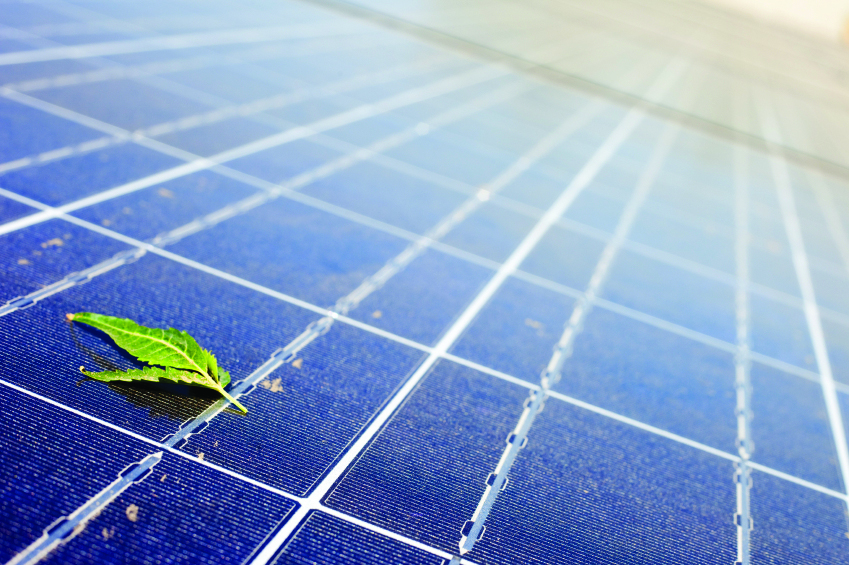
These are made from cells created by cutting thin slices from polycrystal silicon block and are slightly lower in efficiency, but also lower in cost per watt. Polycyrstal silicon is the “chicken nugget” of silicon, made by combining many individual crystals. They are easy to spot because they have an uneven color, usually blue.
Thin Film
These are made by depositing a thin layer of very finely powdered silicon (amorphous silicon) or other photovoltaic material, on a substrate. While lower in efficiency that crystalline cells, they are considerably cheaper per watt. The downside is that they take up more space per watt. They are perfect for roof mounted systems as they are incredibly strong, have superb wind uplift and produce power even in undesirable conditions.
Generally considered the workhorses of the solar power market, these are made from cells created by cutting thin slices from single crystal silicon block and are higher in efficiency, but also higher in cost per watt. These are easily identifiable, made up of uniformly stacked rounded cells. Because they’re made from just one crystal, not multiple crystals fused together, the process of making them is one of the most complex and costly ones around.
PolycrystallineThese are made from cells created by cutting thin slices from polycrystal silicon block and are slightly lower in efficiency, but also lower in cost per watt. Polycyrstal silicon is the “chicken nugget” of silicon, made by combining many individual crystals. They are easy to spot because they have an uneven color, usually blue.
Thin Film
These are made by depositing a thin layer of very finely powdered silicon (amorphous silicon) or other photovoltaic material, on a substrate. While lower in efficiency that crystalline cells, they are considerably cheaper per watt. The downside is that they take up more space per watt. They are perfect for roof mounted systems as they are incredibly strong, have superb wind uplift and produce power even in undesirable conditions.
Monday, March 14, 2011
Join Us At The Florida Building & Facility Maintenance Show - April 27th & 28th
Join us on April 27th - 28th at the Florida Building & Facility Maintenance Show at the Florida State Fairgrounds in Tampa, FL. This is a great opportunity to meet some of the RAMCON team and discover the many ways RAMCON can be service to you and your organization.
You'll have the opportunity to win numerous RAMCON discounts and giveaways PLUS be entered to win for our special grand prize.
At this show, you'll have the opportunity to partake in numerous Free Educational Sessions including Gree Maintenance, Regulatory Compliance, Predictive Maintenance, Technology, Emergency Planning, Management and much more.
It's a great opportunity to get involved with Florida's Building Owners, Facility Managers and Maintenance leaders.
Leave a comment below with your email, or email us at info@ramconroofing.com and we'll send you an exclusive VIP Ticket that includes Free Admission to the show.
You'll have the opportunity to win numerous RAMCON discounts and giveaways PLUS be entered to win for our special grand prize.
At this show, you'll have the opportunity to partake in numerous Free Educational Sessions including Gree Maintenance, Regulatory Compliance, Predictive Maintenance, Technology, Emergency Planning, Management and much more.
It's a great opportunity to get involved with Florida's Building Owners, Facility Managers and Maintenance leaders.
Leave a comment below with your email, or email us at info@ramconroofing.com and we'll send you an exclusive VIP Ticket that includes Free Admission to the show.
Facts About Solar Energy
Sun Related Facts About Solar Energy
- Sunlight travels to the earth in approximately 8 minutes from 93,000,000 miles away, at 186,282 miles per second.
- The sun is also the main source of non-renewable fossil fuels (coal, gas and petroleum), which began life as plants or animals whose energy came from the sun millions of year ago.
- Solar energy is responsible for weather patterns and ocean currents.
- Clouds, pollution and wind can prevent the sun’s rays from reaching the earth.
Other Interesting Facts About Solar Energy
- Da Vinci predicted a solar industrialization as far back as 1447.
- In one hour more sunlight energy falls on the earth than what is used by the entire population in one year.
- About 2 billion people in the world are currently without electricity.
- Accounting for only 5 percent of the world’s population, Americans consume 26 percent of the world’s energy.
Monday, March 7, 2011
Incentives Make Solar Energy More Affordable Than Ever
The combination of government and utility incentives can drive down the cost of your solar installation by up to 70%! Federal, State, and Local governments, along with utilities, are pitching in to lower the cost of your solar panels because solar is a great investment for them as well as for you.
Federal Rebate
The Federal rebate is very straightforward. It is 30% off your installation price. It’s a simple one page form that attaches to your Federal tax return and you will get your money as a tax rebate.
Florida Incentives
As part of the 2006 Florida Energy Act, the Solar Energy Systems Incentives Program offers rebates for individuals or businesses to purchase solar photovoltaic systems. Solar photovoltaic systems are eligible for a $4/watt rebate, capped at $100,000 for businesses. In addition, In May 2005, a law was passed (HB 805) that permanently made photovoltaic panels exempt from Florida Sales Tax.
Utility Credits
Florida encourages its utility companies to utilize green technologies, specifically solar. As such, the state offers a $0.01/kWh credit to power companies that use renewable energy. The utility achieves this by providing incentives to you to install photovoltaic systems, which are becoming more generous. It’s a win-win-win situation; you get money from the utility for putting up solar panels, the utilities don’t need to become experts in adding solar to roofs, and the state gets more solar installations.
Net Metering
As of July 1, 2009, all utilities in the Florida, whether investor owned or owned by the municipality now have to credit your solar power dollar for dollar. That means any excess energy your panels produce gets sold to your local utility, and then you get to buy that power back at the same price.
Federal Rebate
The Federal rebate is very straightforward. It is 30% off your installation price. It’s a simple one page form that attaches to your Federal tax return and you will get your money as a tax rebate.
Florida Incentives
As part of the 2006 Florida Energy Act, the Solar Energy Systems Incentives Program offers rebates for individuals or businesses to purchase solar photovoltaic systems. Solar photovoltaic systems are eligible for a $4/watt rebate, capped at $100,000 for businesses. In addition, In May 2005, a law was passed (HB 805) that permanently made photovoltaic panels exempt from Florida Sales Tax.
Utility Credits
Florida encourages its utility companies to utilize green technologies, specifically solar. As such, the state offers a $0.01/kWh credit to power companies that use renewable energy. The utility achieves this by providing incentives to you to install photovoltaic systems, which are becoming more generous. It’s a win-win-win situation; you get money from the utility for putting up solar panels, the utilities don’t need to become experts in adding solar to roofs, and the state gets more solar installations.
Net Metering
As of July 1, 2009, all utilities in the Florida, whether investor owned or owned by the municipality now have to credit your solar power dollar for dollar. That means any excess energy your panels produce gets sold to your local utility, and then you get to buy that power back at the same price.
Monday, February 28, 2011
Looking at Solar PV Roofing
Generating part or all of a facility’s electricity with photovoltaic (PV) systems is growing in popularity all over Florida. Whether the systems are used to lower peak demand costs, power an individual facility or enhance the green aspects of a project, even the smallest systems can help lower electric bills and clean up the environment.
Of course, up-front cost remains an issue. Many states, such as Florida, offer a range of incentive programs, many of which could take a PV system from the red to the black in just a few years. And as utility rates increase, payback periods shrink.
A Nod To The Newest PV System
For those of you whose idea of a PV system dates back to the ‘70s — glossy blue tinted panels fastened to metal racks bolted to a roof — take note: New products are available that integrate PVs into the building, making them not only less obvious but also less risky.
There are many concerns about what type of PV system is best. Obviously, cost is a major issue, despite generous state and utility rebates. The system also needs to fit the design and maintenance needs of the facility. Many owners are not interested in poking holes in a perfectly good roof. This is the reason many organizations are now looking at thin-film flexible membranes.
Thin-film photovoltaics do not have a rigid frame or solar cells. Instead, the material that generates electricity is layered onto a rubber-like substance. It’s as flexible as a roll of roofing material and we install it onto the roof much the same. It attaches directly to the roof surface with adhesives so there are no roof penetrations. In fact, the system really can’t be seen unless you are actually on the roof. Even better, they are more efficient under diffuse light than typical, rigid polycrystalline modules, something worth considering. These flex panels are tough stuff. To test their durability, the team at RAMCON has walked on them, stomped on them and even whacked them with a hammer. They continued to produce electricity as specified.
RAMCON is among the very few contractors in the industry with experience in photovoltaic systems, having installed tens of thousands of watts. For more information or to determine the costs and estimated pay back periods for a system on your facility, give us a call at (877) 726-2661.
Of course, up-front cost remains an issue. Many states, such as Florida, offer a range of incentive programs, many of which could take a PV system from the red to the black in just a few years. And as utility rates increase, payback periods shrink.
A Nod To The Newest PV System
For those of you whose idea of a PV system dates back to the ‘70s — glossy blue tinted panels fastened to metal racks bolted to a roof — take note: New products are available that integrate PVs into the building, making them not only less obvious but also less risky.
There are many concerns about what type of PV system is best. Obviously, cost is a major issue, despite generous state and utility rebates. The system also needs to fit the design and maintenance needs of the facility. Many owners are not interested in poking holes in a perfectly good roof. This is the reason many organizations are now looking at thin-film flexible membranes.
Thin-film photovoltaics do not have a rigid frame or solar cells. Instead, the material that generates electricity is layered onto a rubber-like substance. It’s as flexible as a roll of roofing material and we install it onto the roof much the same. It attaches directly to the roof surface with adhesives so there are no roof penetrations. In fact, the system really can’t be seen unless you are actually on the roof. Even better, they are more efficient under diffuse light than typical, rigid polycrystalline modules, something worth considering. These flex panels are tough stuff. To test their durability, the team at RAMCON has walked on them, stomped on them and even whacked them with a hammer. They continued to produce electricity as specified.
RAMCON is among the very few contractors in the industry with experience in photovoltaic systems, having installed tens of thousands of watts. For more information or to determine the costs and estimated pay back periods for a system on your facility, give us a call at (877) 726-2661.
Subscribe to:
Posts (Atom)